
What is a CASA?
CASA
[ kah-suh ] noun
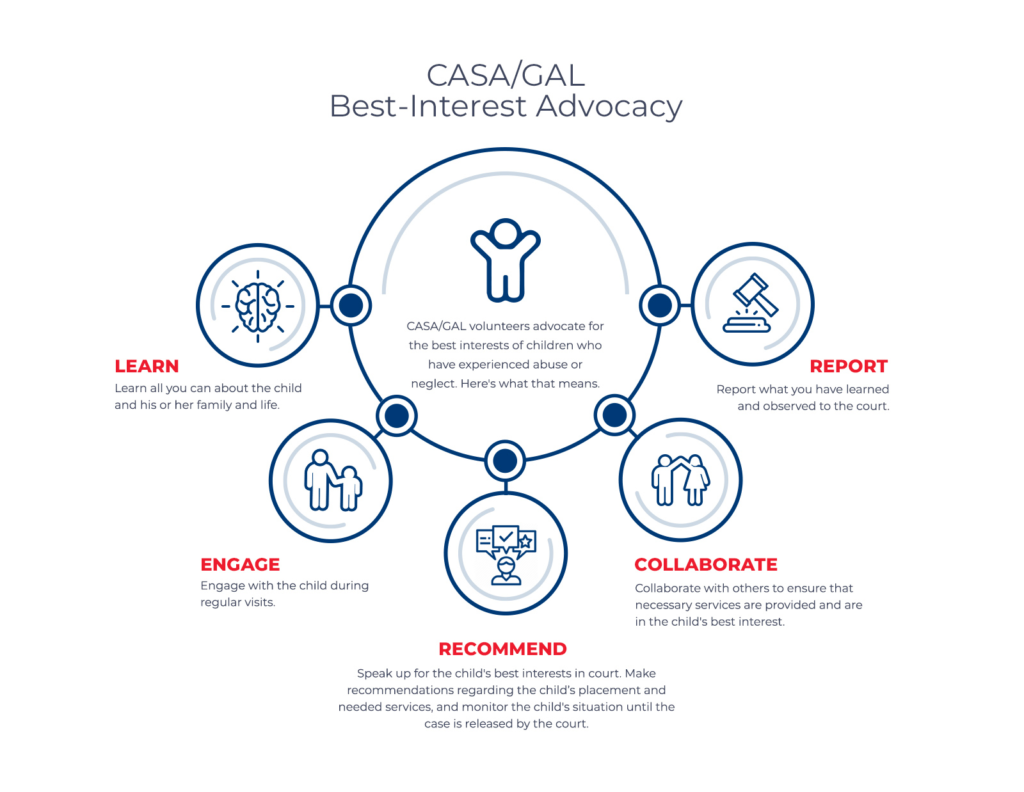
Court Appointed Special Advocate — A trained volunteer appointed by a judge to advocate for the best interests of children who have experienced abuse or neglect within the court system. CASA volunteers provide consistent support, gather information, and help ensure each child’s voice is heard.
HOW IT WORKS
The CASA Model
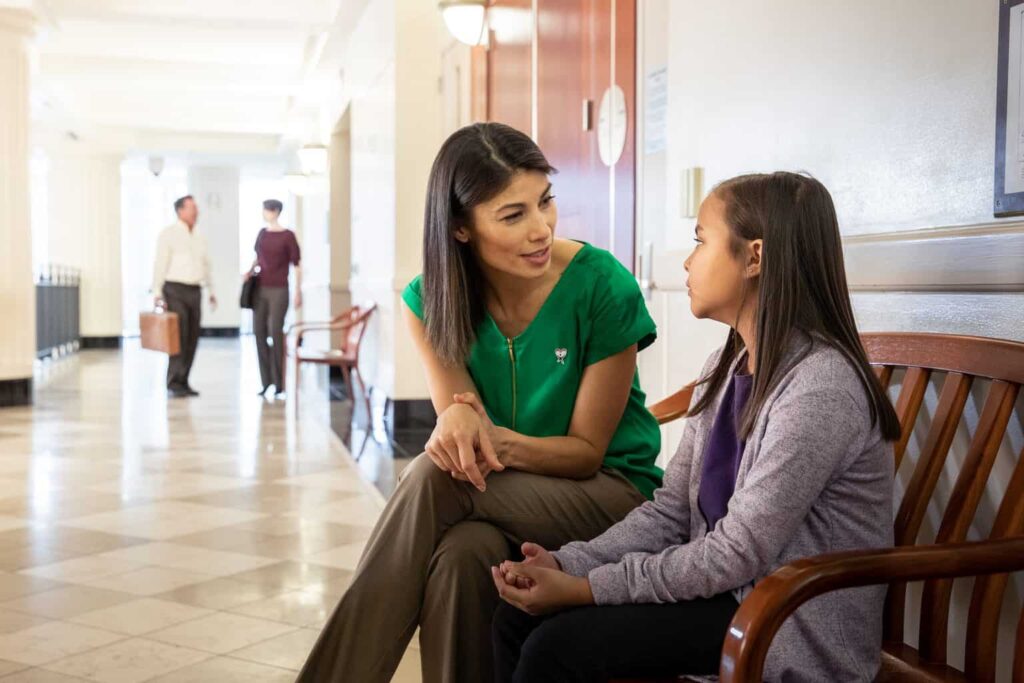
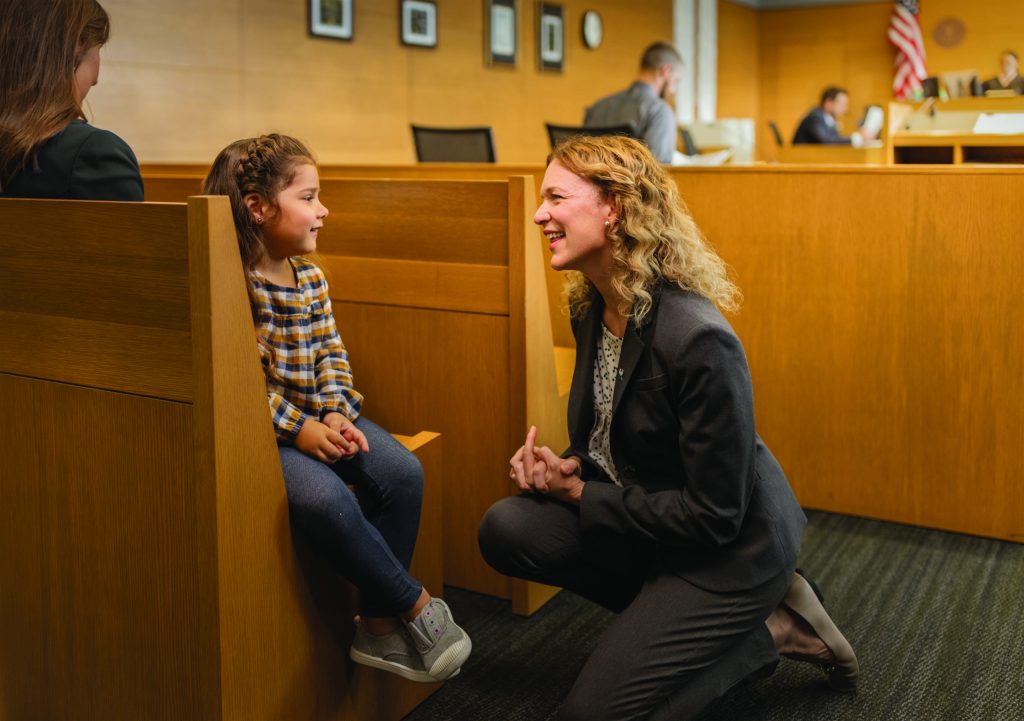
CASA volunteers are appointed by judges to advocate for children’s best interests. They stay with each case until it is closed and the child is in a safe, permanent home. We serve children from birth through the age defined by state statute as the limit to youth remaining in care.
Volunteers work with legal and child welfare professionals, educators and service providers to ensure that judges have all the information they need to make the most well-informed decisions for each child.
Our best-interest advocacy is driven by the guiding principle that children grow and develop best with their family of origin, if that can be safely achieved. Most of the children we work with are in foster care, but some are with their family of origin. And, most children who leave foster care do so to return to their family.
What It Takes To Be A CASA
CASA volunteers come from all walks of life, but each one shares a commitment to advocating for children with compassion, consistency, and care.
Compassion for Children
CASA volunteers are caring adults who are passionate about helping children feel safe, supported, and heard.
Be at Least 21 Years Old
Volunteers must be at least 21 years old with a high school diploma or equivalent.
Pass a Background Check
All volunteers must have a clean criminal and CPS background check to help ensure the safety and well-being of children.
Complete Volunteer Training
CASA volunteers receive 30+ hours of specialized training focused on child advocacy, trauma, court systems, communication, and more.
Commit Time Consistently
CASA volunteers commit 10-15 hours of time every month for at least one year.
screening interview
CASA volunteers must complete a screening interview with CASA staff.
A Brighter Future for Our Community
Children who have experienced abuse or neglect fare better with a CASA/GAL volunteer by their side. Studies have shown:
They are
MORE LIKELY
to find a safe, permanent home
They are
MORE LIKELY
to succeed in school
They are
half as likely
to re-enter the foster care system

Frequently Asked Questions
CASA stands for Court Appointed Special Advocate. CASA volunteers are trained community members appointed by a judge to advocate for the best interests of children who have experienced abuse or neglect.
CASA volunteers build relationships with children, gather information from everyone involved in the child’s life, and provide recommendations to the court to help ensure the child has a safe and permanent home.
CASA volunteers come from all walks of life. Volunteers must be at least 21 years old, complete training, pass background checks, and have a heart for helping children.
Most CASA volunteers dedicate approximately 10–15 hours per month to their assigned case, including visits, communication, and court-related activities.
No. CASA provides all necessary training and ongoing support. No legal or social work background is required.
It’s not easy to be a CASA volunteer. It can be time consuming, frustrating and at times, and heartbreaking. But, at other times, it is incredibly rewarding. It is rewarding when you realize that without you, the judge wouldn’t have known a key piece of information that impacted his/her decision; or the child wouldn’t have received desperately needed therapy or services without your input; or that a parent wouldn’t have received needed resources that helped them create a safe and stable home for the child. Moments like these make it all worthwhile.
CASA volunteers can specify the age and gender preferences of the children they would like to work with.* Volunteers are assigned one child or a set of siblings at a time so they can focus on giving them the individualized advocacy and attention they need.
*Please keep in mind that these requests cannot always be accommodated.
CASA volunteers are appointed to children who have come to the attention of the juvenile court system due to abuse or neglect. Like a mentoring program, the CASA volunteer does develop a relationship with the child through frequent contact; however, the primary role of the CASA volunteer is to gather information about the child, write reports to the court and attend court hearings. The CASA program is not a mentoring program. The CASA volunteer does not go on social outings with the child or play an active role in the child’s day-to-day life. Instead, the CASA volunteer is involved with the child and the case while the child is in foster care, to help him or her during this difficult time, to help have the best possible outcome. Once the case has ended, the CASA volunteer does not typically remain involved in the child’s life.
Volunteers typically stay with a case until it is resolved in court, which usually lasts a year, but could go on longer if the children cannot be reunified with their parents.
Children are referred to CASA through the court system in cases involving abuse or neglect.
No. CASA is an organization that works in partnership with the court system and child welfare professionals.
Absolutely. CASA programs rely on donations, community partnerships, event support, and awareness efforts to continue serving children in need.
You can apply online, attend an information session, or contact our team to learn more about becoming a CASA volunteer or supporting our mission.